


 Verified
  WHY TRUST FOOTITALIA?


Anonymous poker sites are built for players who want to play real money poker online without sharing unnecessary personal information. Instead of traditional sign-ups, document uploads, or identity checks, these platforms prioritise privacy-first access, crypto payments, and streamlined account creation.
For many players, anonymity is not about avoiding rules. It is about control. Anonymous poker sites reduce data exposure, remove friction during withdrawals, and allow players to focus purely on the game. Most platforms in this space use cryptocurrency as their primary payment method, which supports faster transactions and fewer third-party checks.
This guide covers the best anonymous poker sites available in 2026. We rank each platform based on real-world usability, including sign-up friction, crypto support, withdrawal speed, traffic quality, and overall poker experience. Below, you’ll find our expert-ranked toplist, followed by detailed reviews of the strongest anonymous poker rooms right now.













Top Anonymous Poker Sites Ranked
The anonymous poker sites listed below were selected for how well they protect player privacy while still delivering a reliable, competitive poker environment. We focused on crypto support, account anonymity, game liquidity, and whether sites avoid unnecessary verification.
- ACR Poker – High-Traffic Poker Room With Flexible Crypto Banking
- Stake.us – Privacy-Friendly Poker With Fast Crypto Payouts
- Black Chip Poker – Anonymous-Friendly Poker With US-Focused Traffic
- BetOnline – Established Poker Room With Optional Verification
- Ya Poker – Low-Profile Poker Site Supporting Private Play
- SportsBetting.ag – Poker Platform With Crypto-First Withdrawals
- Phenom Poker – Smaller Anonymous Poker Room With Soft Fields
- Bovada Poker – Poker Network Using Anonymous Player Tables
- Ignition Poker – Fully Anonymous Tables With Recreational Focus
The Best Anonymous Poker Sites Reviewed
Our team reviewed anonymous poker sites with one core question in mind: how private is the experience in real use? Instead of marketing claims, we focused on sign-up friction, crypto-only banking, withdrawal behaviour, table anonymity, and whether sites introduce verification later in the process.
Anonymous poker is not just about skipping ID checks. It is about avoiding account freezes, protecting transaction privacy, and playing in environments where personal data is not part of the game. Below is our first in-depth review of the strongest anonymous poker platform available right now.
1. CoinPoker – Best Anonymous Crypto Poker Site Overall
2. ACR Poker – Anonymous Play With High-Volume US Traffic
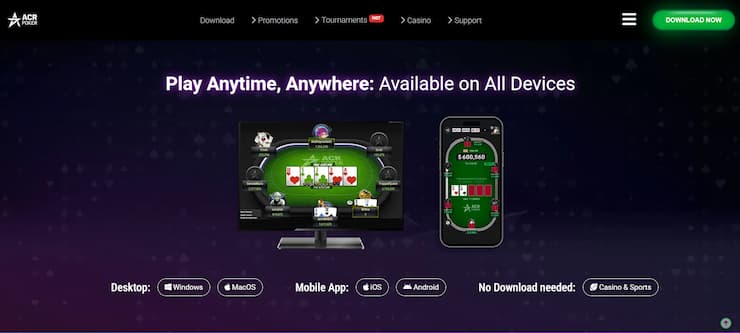
ACR Poker gives players a semi-anonymous experience that suits those wanting privacy while still enjoying plenty of table action. Although the platform asks for basic account details when you sign up, in most cases players are able to deposit, play, and withdraw using cryptocurrency without needing to complete identity verification straight away. For many players, this strikes a practical balance between staying private and keeping funds accessible.
The biggest strength of ACR Poker is traffic. Cash games and tournaments run around the clock across a wide range of stakes, which is something fully anonymous platforms cannot always match. Screen names are used at the tables, and personal details are never displayed publicly, allowing players to operate without revealing real-world identity during gameplay.
From a banking perspective, crypto is where ACR Poker works best. Bitcoin and other supported cryptocurrencies offer faster withdrawals and fewer interruptions compared to card-based methods. While verification can be triggered in specific situations, many players are able to withdraw regularly without submitting documents, especially when using crypto consistently.
This poker room is best suited to players who value anonymity at the table, strong US-facing traffic, and reliable tournament schedules.
ACR Poker Pros:
- High cash game and tournament traffic
- Crypto deposits and withdrawals supported
- Anonymous screen names at tables
- Wide range of stakes and formats
- Strong US player base
ACR Poker Cons:
- Not fully anonymous at account level
- Verification may be requested in some cases
- Interface feels dated compared to newer platforms
3. Stake.us – Anonymous Crypto Poker With Fast Payouts
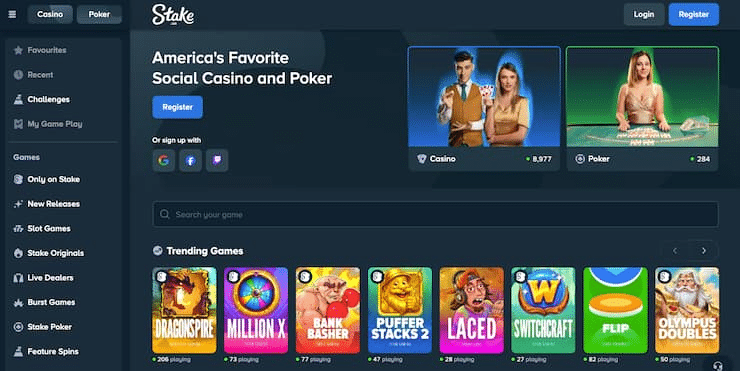
Stake.us is known for its combination of minimal friction and crypto-centric banking, making it a strong choice for players who prioritise privacy without sacrificing speed or variety. While the site requires basic account setup, it does not push extensive documentation for standard poker play, and players can often fund and withdraw via cryptocurrency without unnecessary hurdles.
One of Stake.us’s main strengths is its integration of poker within a broader crypto gambling ecosystem. Deposits in popular cryptocurrencies like Bitcoin are almost instant, and the process remains straightforward even for players who prefer to keep personal data to a minimum. The poker client itself is intuitive and performs reliably, appealing to both casual and more experienced players alike.
Because the platform uses a unified wallet across poker, casino, and sports betting, cashouts are smooth and quick — a real advantage at anonymous tables where delayed withdrawals can break the experience. Stake.us emphasises transparency in its crypto flows, which builds confidence among privacy-oriented players.
This poker room is a great fit for players who want fast, predictable crypto payouts, low-profile play, and a privacy-friendly environment that doesn’t interrupt gameplay with repeated identity checks.
Stake.us Pros:
- Crypto deposits and withdrawals with fast processing
- Unified wallet across poker and other play types
- Intuitive poker interface with solid performance
- Minimal documentation for regular play
- Strong support for Bitcoin and alternative coins
Stake.us Cons:
- Not fully anonymous by default (basic data required)
- Smaller dedicated poker community than legacy networks
Is It Legal to Play Crypto Poker in the US?
The legality of playing online poker with cryptocurrency in the US depends on how gambling laws are applied, rather than on crypto itself. There is no federal law that explicitly bans individuals from playing online poker or using cryptocurrency for wagering. Instead, US gambling regulation focuses on how operators are licensed and how financial transactions are processed.
At the federal level, legislation such as the Unlawful Internet Gambling Enforcement Act (UIGEA) regulates how banks and payment processors handle gambling-related transactions, rather than criminalising players. UIGEA does not specifically mention poker, nor does it prohibit the use of cryptocurrency. This distinction is important, as it explains why many internationally licensed poker sites can legally accept US players while operating outside US jurisdiction.
Poker is also treated differently from other forms of gambling under US law. Several court interpretations and enforcement priorities have historically viewed poker as a game with a significant skill component, which has influenced how it is regulated compared to casino games. That said, individual states retain the authority to regulate or restrict online poker activity within their borders.
Why US Players Use International Crypto Poker Sites
Because of this structure, most US players who use anonymous poker sites are playing on internationally licensed casino platforms that accept cryptocurrency. These sites operate under foreign gaming authorities and are not regulated by US state agencies. While they are not state-licensed, it is not illegal for US players to access them, and enforcement actions typically target operators rather than individuals.
Cryptocurrency adds an additional layer of separation from traditional banking systems. Since crypto transactions do not rely on US banks or card networks, they are often processed more reliably on offshore poker sites. This is why crypto poker is commonly associated with no verification betting sites, faster withdrawals, and fewer payment-related interruptions.
As always, laws and enforcement priorities can evolve. Players who want the most up-to-date legal clarity should consult official state statutes, federal resources, or trusted legal summaries before playing.

How Anonymous Poker Sites Work
Anonymous poker sites are designed to minimize the personal information players have to hand over, without giving up fair play or secure transactions. In this context, “anonymous” does not mean hidden gameplay or unregulated tables. What it does mean is less identity exposure, both at signup and throughout play.
Most anonymous poker sites use username-based accounts rather than real-name profiles. Players appear at the tables under chosen screen names, and opponents never see personal details. This is standard when you play poker online free, but anonymous platforms go further by limiting the amount of information required to create and maintain an account.
What Makes a Poker Site Anonymous
Anonymous poker sites typically focus on three core areas:
- Account creation with minimal personal details
- Crypto-first banking instead of traditional cards or bank accounts
- Gameplay separation between player identity and table activity
In many cases, players can register with just an email address or wallet connection. Verification, if required at all, usually happens only at higher withdrawal thresholds or for security checks, not at signup.
The Role of Cryptocurrency
Cryptocurrency is central to how anonymous poker sites operate. Because crypto transactions do not rely on banks or card networks, deposits and withdrawals can be processed without sharing sensitive financial information. This is why many anonymous poker platforms are also associated with faster casino payouts and no verification betting sites, especially for lower to mid-range cashouts.
Crypto does not make gameplay secret or unmonitored. Poker rooms still track hands, detect collusion, and enforce rules. The difference is that payments and account management are less tied to traditional identity checks.
What Anonymous Poker Is Not
It is important to be clear about the limits of anonymity:
- Games are still monitored for fairness and integrity
- Player behaviour is tracked to prevent cheating or collusion
- Withdrawals may still trigger checks at higher amounts
- Sites operate under international licensing, not in a legal vacuum
Anonymous poker sites aim to reduce friction, not remove oversight. The result is a smoother experience for players who value privacy and efficiency, without compromising the structure of real-money online poker.
This setup is why anonymous poker sites appeal to players who want faster access, fewer interruptions, and more control over how much personal information they share, while still playing on established, professionally run platforms.
Banking Methods at Anonymous Poker Sites
Payment handling is one of the biggest reasons players choose anonymous poker sites. Because these platforms are designed around reduced identity exposure, banking is usually streamlined, crypto-first, and built to avoid unnecessary friction during deposits or withdrawals.
The table below breaks down the most common payment methods you will encounter at anonymous poker sites and how they compare in real use.
| Payment Method | Deposit Speed | Withdrawal Speed | Anonymity Level | Typical Use Case |
| Cryptocurrency | Instant to minutes | Minutes to hours | High | Fast deposits, quick withdrawals, minimal verification |
| E-Wallets | Instant | Same day to 48 hours | Medium | Faster cashouts without direct bank exposure |
| Debit / Credit Cards | Instant | 3–7 business days | Low | Initial deposits, familiar banking |
| Bank Transfer | 1–2 days | 3–7 business days | Low | Large withdrawals, traditional banking |
| Prepaid Cards | Instant | Not supported | Medium | Controlled deposits only |
What This Means in Practice
At anonymous poker sites, cryptocurrency is usually the preferred option. It offers the best balance of speed, reliability, and privacy, especially for players who want to avoid repeated payment checks or delays. This is why crypto is commonly linked with no verification new betting sites and poker rooms focused on fast cashouts.
E-wallets are a secondary option for players who want quicker withdrawals than cards without fully switching to crypto. Cards and bank transfers still exist, but they are generally slower and more likely to involve additional checks.
For players who prioritise smooth payouts and minimal interruptions, choosing an anonymous poker site with multiple banking options is just as important as table traffic or game variety.
How to Choose a Safe Anonymous Poker Site
Not all anonymous poker sites offer the same level of reliability, even if they advertise privacy or crypto support. The safest platforms balance reduced identity requirements with clear operational standards, predictable payouts, and transparent game mechanics.
When evaluating anonymous poker sites, focus on how they perform in real use rather than how they market themselves.
Licensing and Operator History
Any anonymous poker site worth depending on should hold a recognized international gaming license and be open about the company that actually runs the platform. These sites sit outside the oversight of US state agencies, yet operators that have been around for a long time still tend to be more trustworthy than platforms that launched only recently and have no solid track record to point to. That distinction matters especially when checking out best new betting sites that promote anonymity as one of their main selling points.
Payment Reliability and Withdrawal Consistency
Fast deposits mean little if withdrawals are delayed or complicated. Safe anonymous poker sites publish clear withdrawal terms, process payouts within stated timeframes, and avoid introducing new requirements at cashout. Platforms that consistently handle crypto withdrawals smoothly tend to offer a better experience, which is why many players associate anonymous poker with no verification betting sites and fast payouts rather than card-based banking.
Software Fairness and Game Integrity
Anonymous poker rooms should use established poker software with transparent shuffling systems and independently tested random number generation where applicable. Game stability, table responsiveness, and consistent hand histories are indicators that the platform prioritises fair play. Poor software performance or unexplained glitches are warning signs, regardless of how private the site claims to be.
Player Liquidity and Table Activity
Even privacy-oriented poker rooms depend on a healthy number of active players to offer a solid experience. Check for platforms that maintain steady cash game activity, run tournaments on a set schedule, and don’t leave you waiting too long for a table. If liquidity is low, you may end up with fewer game options and inconsistent play quality, regardless of how robust the anonymity or banking features are.
Support Access and Dispute Handling
Even anonymous poker sites should provide accessible customer support. Reliable platforms offer live chat or responsive email support and clearly explain how disputes, technical issues, or payment questions are handled. A lack of support channels is often a red flag, especially on platforms that also promote themselves as best payout online casinos or fast-cashout poker rooms.
What Actually Matters for Anonymous Players
In practice, safe anonymous poker sites prioritise:
- Predictable withdrawals over exaggerated privacy claims
- Clear rules and visible licensing details
- Stable poker software with active tables
- Support that responds when issues arise
Anonymity should simplify the playing experience, not introduce uncertainty. Choosing platforms that combine privacy with operational transparency gives players the best balance of control, safety, and long-term usability.
Anonymous Poker vs Traditional Online Poker
Anonymous poker and traditional online poker may look similar on the surface, but they differ significantly in how accounts are set up, how payments are handled, and how much personal information is required. The table below highlights the key practical differences that matter most to players.
| Feature | Anonymous Poker Sites | Traditional Online Poker Sites |
| Account Setup | Minimal details, often email only | Full personal details required |
| Identity Verification | Rare or optional | Mandatory KYC verification |
| Payment Methods | Crypto-first, limited fiat | Cards, banks, e-wallets |
| Withdrawal Speed | Minutes to hours (crypto) | Days to weeks in some cases |
| Privacy Level | High | Low to moderate |
| Banking Reliability | Very high | Can be affected by bank declines |
| Regulation | International licenses | State or country regulated |
| Player Pools | Global or international | Often restricted by location |
| Anonymity During Play | Usernames not tied to identity | Accounts linked to verified identity |
What to Look Out for When Playing on Anonymous Poker Sites
Anonymous poker sites offer flexibility and privacy, but they also place more responsibility on the player. Without the safeguards of tightly regulated platforms, knowing what to watch for is essential.
Platform Reputation Comes First
Not all anonymous poker sites are equal. Focus on platforms with a long operating history, visible ownership, and an active player base. Sites that have been running for years without payout issues are far safer than newly launched rooms with little public track record.
Understand the Limits of Anonymity
“Anonymous” does not always mean zero checks. Some sites allow you to play freely up to certain limits but may request additional verification for very large withdrawals. This is normal and not necessarily a red flag, as long as the rules are clearly explained upfront.
Pay Attention to Game Integrity
Because accounts are not tied to real-world identities, collusion and bot play can be a bigger concern on weaker platforms. Strong anonymous poker sites counter this with:
- Active hand-history analysis
- Automated bot detection
- Manual security reviews
If a site never mentions game integrity or security measures, that is worth questioning.
Stick to Crypto You Can Track Easily
Crypto poker works best when you actively monitor your transactions. Always:
- Double-check wallet addresses
- Keep records of deposits and withdrawals
- Start with smaller amounts on a new site
This reduces mistakes and gives you confidence in how the cashier behaves before committing more funds.
Avoid Chasing Losses in Fast Games
Anonymous poker often runs faster tables and looser formats. That speed can amplify emotional decisions. Setting session limits and stepping away after bad runs is especially important when you are not anchored by traditional account checks or delays.
Read Cashout Rules Before You Play
The biggest problems on anonymous poker sites usually appear at withdrawal, not during play. Before sitting down:
- Check minimum and maximum cashout limits
- Confirm supported cryptocurrencies
- Look for clear processing timeframes
If this information is vague or buried, choose another site.
Anonymous poker works best for disciplined players who value privacy and speed but are willing to do basic due diligence. When you choose established platforms, track your banking carefully, and play within defined limits, anonymous poker can be both efficient and reliable.

Anonymous Poker Bonuses Explained
Casino bonuses at anonymous poker sites work differently from traditional, fully verified poker rooms. Because these platforms prioritise privacy and fast onboarding, promotions are usually simpler, crypto-focused, and tied closely to actual play rather than long verification processes. Understanding how these bonuses work helps avoid confusion later, especially when it comes time to withdraw.
Below is a breakdown of the most common poker bonuses you will find at anonymous poker sites and when they make sense to use.
| Bonus Type | How It Works | What to Watch For | Best For |
| Welcome Bonus | Deposit match on your first crypto deposit | Poker-only wagering, release rate per raked hand | New players starting with a bankroll |
| Rakeback | Percentage of rake returned automatically | Rakeback % and payment frequency | Regular cash game players |
| Reload Bonus | Smaller bonus on repeat deposits | Often time-limited or capped | Returning players who redeposit |
| Leaderboard Rewards | Prizes based on hands played or points | High volume required to compete | Grinders and multi-table players |
| Freerolls | Free-entry tournaments with real prizes | Small prize pools, high variance | Low-risk play and testing a site |
| Tournament Tickets | Entry into specific poker tournaments | Limited flexibility, expiry dates | MTT-focused players |
| Cashback | Loss-based refund over a set period | May exclude tournament buy-ins | Players with swingy sessions |
| Crypto Deposit Bonus | Extra bonus for using specific coins | Coin restrictions and wagering rules | Players using BTC, ETH, or USDT |
How Anonymous Poker Bonuses Differ
Most anonymous poker sites avoid overly complex bonus systems. Instead of long rollover requirements, bonuses are often cleared gradually through rake or tournament fees. This structure fits players who want transparency and predictable progress rather than aggressive marketing offers.
As with any poker bonus, the key is alignment. If you mainly play cash games, rakeback usually delivers more value than a large welcome bonus. Tournament players tend to benefit more from tickets, leaderboards, or freerolls.
Always review:
- How bonuses are released
- Which games contribute to clearing
- Any maximum cashout limits
The best anonymous poker bonuses support real play without forcing unnatural volume or locking funds behind unclear conditions.
Responsible Gambling at Anonymous Poker Sites
Anonymous poker sites remove many traditional barriers to entry, which makes responsible gambling habits especially important. Faster onboarding, crypto banking, and instant access to tables can make it easier to play longer than intended if limits are not set in advance.
The most effective approach is to treat poker as a skill-based form of entertainment, not income. Set clear bankroll limits before you deposit, decide how long each session will last, and step away once those limits are reached. Avoid increasing stakes to recover losses, as this often leads to poor decision-making rather than improved results.
Most reputable anonymous poker sites provide tools that help players stay in control, including:
- Deposit limits or wallet-level controls
- Session reminders or manual time tracking
- Self-exclusion or account freezes on request
Because cryptocurrency transactions are fast and irreversible, tracking deposits and withdrawals manually is strongly recommended. Keeping a simple log of buy-ins, cashouts, and session results helps maintain awareness of real-world spending.
If poker ever starts to feel difficult to manage, confidential support is available. US-facing resources include:
- National Council on Problem Gambling (1-800-GAMBLER)
- Gamblers Anonymous
- Responsible Gambling Council
Seeking support is a proactive step and part of playing responsibly.
Final Verdict
Anonymous poker sites fill a clear niche for players who value privacy, fast access, and crypto-first banking over traditional account verification. By removing lengthy sign-up processes and relying on cryptocurrency payments, these platforms offer a streamlined way to play real money poker without unnecessary friction.
Platforms such as ACR Poker, Stake.us, and Black Chip Poker, appeal to different play styles depending on whether you prioritise tournaments, cash games, or alternative reward systems.
The key to a good experience is choosing established platforms, understanding how bonuses and rakeback work, and playing within defined limits. When used deliberately, anonymous poker sites can offer a fast, flexible, and sustainable way to play online poker.