

Fabio Cannavaro Claims Young Italian Players Are Not Given Enough Opportunities in Serie A – Is He Right?
Comparatively speaking, Serie A is a mire for young players.
 Charlie Rhodes
Updated on 24 December 2025
Charlie Rhodes
Updated on 24 December 2025


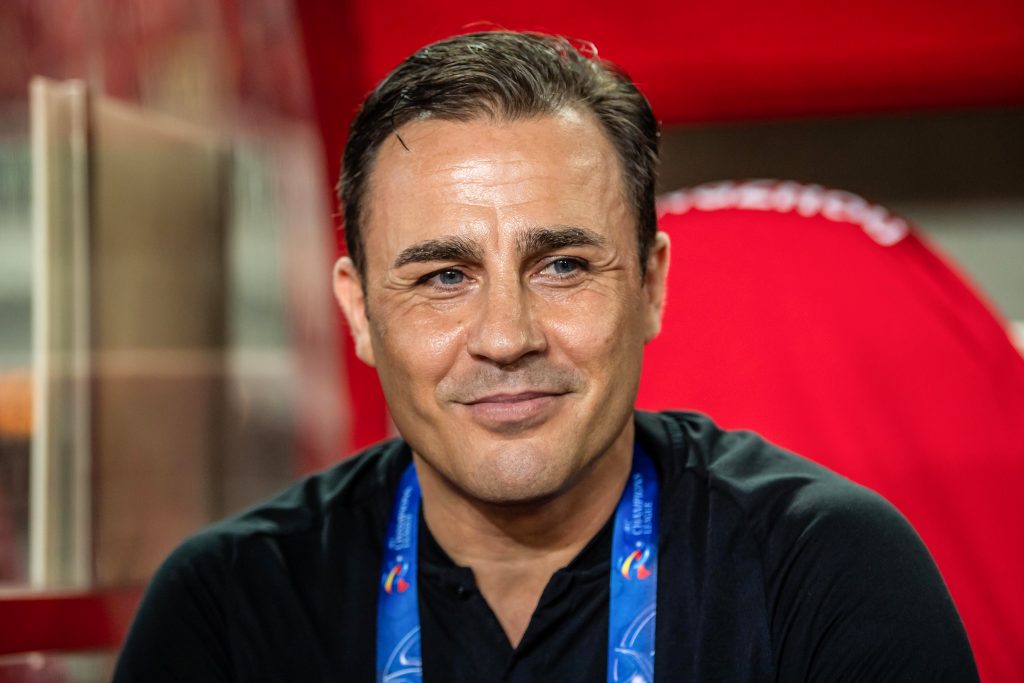
It is no secret that Serie A is disproportionately difficult to break into for young players, but World Cup-winning captain Fabio Cannavaro has declared the lack of homegrown talent as the most fundamental flaw in Italian football.
Breaking into elite, top-flight football is a decidedly gruelling endeavour for any hopeful young player. For context, out of the 1.5 million boys in England who play organized football, around 180 make it as a professional – that equates to around 0.012 percent.
Over 90 percent of former academy graduates aged between 21 to 26 also failed to make a single Premier League appearance, which helps to underline just how difficult it is to establish a foothold at an elite level.
The Premier League is heralded as football’s preeminent league, and although there are extremely limited minutes available for U21 players, it is not the worst environment for development among Europe’s top five leagues.
Fabio Cannavaro Says the Lack of Young Players in Serie A is Worrying
In a recent interview with Tuttosport, former Inter Milan and Juventus legend Fabio Cannavaro was asked what the biggest flaw in the Italian game is right now.
He replied: “Not many Italians are used, and even fewer young players. All this is reflected in the national team and the coaches who have to make the call-ups.”
The Uzbekistan national team coach Cannavaro continued by saying Italian football has become too focused on tactics rather than technique, which he says has been pioneered by the likes of Roma manager Gian Piero Gasperini, whom managers are now looking to emulate.
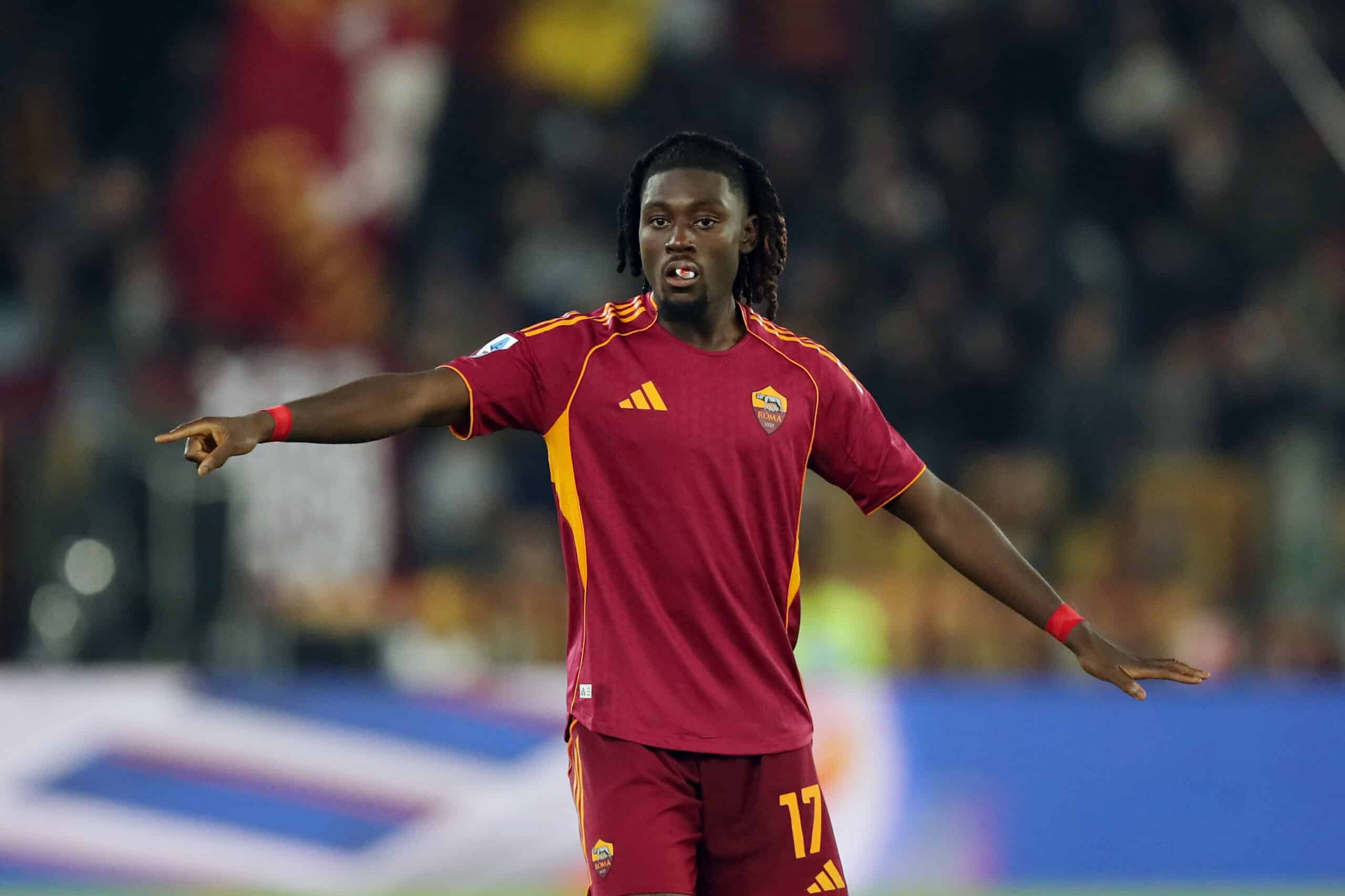
While there is an exciting inundation of young Italian players, such as Giorgio Scalvini, Fabio Miretti and Pio Esposito, evidence shows that they are largely afforded very few minutes, and Cannavaro’s fears are valid.
Serie A Among the Worst Development League For Young Players
Using data collected by the CIES Football Observatory, it is clear Serie A is failing in its duty to provide young players with a nurturing environment.
50 of the top leagues in the world were analyzed to see the percentage of minutes played by U21 footballers across 2025.
The Australian A-League led the rankings (17.7 percent of minutes), followed by Serbia’s Super Liga (15.8 percent) and Denmark’s Superliga (11.7 percent).
France’s Ligue 1 ranked highest among Europe’s top five leagues, with U21 players making up around 7.8 percent of total minutes played, while at the other end of the spectrum, just 1.9 percent of minutes were handed to young players in Serie A.
Not only does Italy’s top-flight offer the fewest minutes to U21 players in Europe’s top five leagues, but of the 50 divisions analyzed in 2025, they ranked 49th – just ahead of the UAE Pro League.
Italian Clubs Among the Highest Producers of Top Five Players
What makes CIES’ development league findings particularly damaging for Serie A is framing it within another of their studies.
CIES also launched an in-depth report spanning two decades to see which countries had the most clubs producing players who featured in Europe’s top five leagues.
Between 2005 and 2025, only France and Spain have produced more players than Italy who play in Europe’s top five leagues, and yet, the avenues for young players remains decidedly narrow.
That indicates that Italian soccer has a talent drain, whereby its best players are jumping ship early in search of better opportunities.
It has forced Serie A to look further afield for replace its lost talent, but creates an imbalance in the national team whereby its young players are scattered across different playing styles, philosophies and leagues.
That very fact has been all but confirmed by veteran journalist Carlo Nesti, who revealed Italy’s top division is made up of a foreign player ratio of between 50 and 60 percent.
Why Serie A Needs to Invest in its Youth
Not only does Serie A fail to offer young players a discernible route to the first team, but teams in other leagues are willing to offer them wages and transfer packages that Italian teams can’t.
Compared to the Premier League for example, Serie A finds itself lagging behind in terms of economic health. Television revenue is worth almost double in England, and as such even mid-table sides are able to offer contracts that rival Italy’s top four.
Giovanni Leoni, Riccardo Calafiori and Fiorentina target Diego Coppola are among some of Italy’s finest young exports to be lured by England’s healthy renumeration and attractive football in recent years.
Those are players that, perhaps 30 years ago, would have stayed put in their native Italy, in what was then considered the best league in the world.
An overhaul from top-to-bottom is needed, from mandating playing time for academy products, to restricting loan deals to Serie B and C.
With the vast majority of Italian teams treading a financial tightrope, simply investing more into youth systems isn’t an option.
While there are plenty of rousing players making their way through the system in Italy, there is a notable gap in their development.
Players come through youth systems as a teenager, experience what it’s like to be around the first team, but their lack of experience is deemed untenable and they are either loaned out to lower league teams, or sold to teams overseas.
Important stages of development, around the ages of 18-22, are often neglected in Serie A, which in turn is hindering not only the league itself, but also the readiness of younger players who are called upon by the Italian national team.
Charlie Rhodes
Charlie has built a deep portfolio across a wealth of sports websites, with a heavy focus on Europe's top five leagues. He has a long-standing interest in Serie A having grown up watching Football Italia on Channel 4 as a child. With extensive experience tailored towards news, long-form content and heavily researched features, Charlie has also garnered experience in several roles in the fintech and marketing sector.
Our unbiased editorial policy
Despite ongoing collaborations with commercial affiliates, the details, information, and reviews we provide remain honest and unbiased. We keep this in check by implementing a stringent editorial policy.
Our policy implements strict editorial standards, ensuring the integrity and trustworthiness of our articles, news, and reviews. Only the highest-quality content reaches our pages. We achieve this through conducting thorough research on each topic, conveyed to you using unbiased reporting, to ensure we earn your trust and keep it.